Disclosure: I may earn a commission if you use links in this post at no extra cost to you.
Why Energy Choice Rates Matter
If you’ve ever looked at your utility bill and thought “Why did my rate just jump again?”, you’re not alone. Electricity and natural gas prices rise and fall with the market, and a lot of people don’t realize they can lock in a fixed rate, instead of paying whatever their utility decides to charge next month.
In some states, residents can choose their electricity and natural gas supplier through a government approved marketplace, often called “energy choice” or something similar. These programs let you shop for the lowest fixed rate, compare plans, and switch providers safely through official state websites.
How It Works
- Your utility company still delivers power or gas.
You’ll continue receiving service from your local utility company, no matter who you buy supply from. - You choose your supplier.
Through your state’s energy choice website, you can compare certified suppliers offering fixed or variable rate plans. - You can lock in your rate.
Many suppliers offer contracts lasting anywhere from 3 months all the way up to 24 months. This means you’ll pay the same price per kWh or MCF, even if market prices spike. - You can switch again later.
When your contract ends, you can renew or shop again. I have never experienced any service drops in the transition.
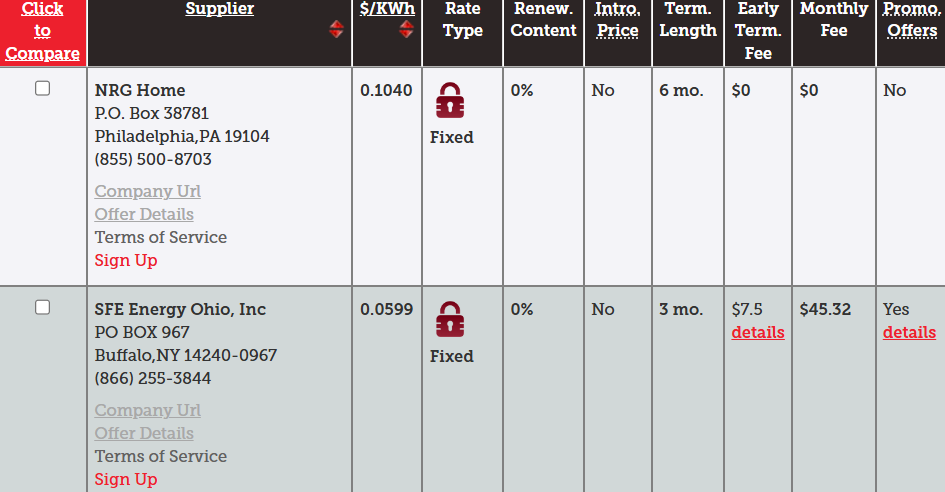
Here’s an example of the one for Ohio below, but many states have a different format.
State-by-State Choice Directory (2026)
Here’s the full list of U.S. states including D.C., showing where you can compare and choose energy suppliers and their rates, plus see what states remain fully regulated.
Anything with an X, means it’s regulated and options are limited or don’t exist. All official links below, go directly to government or public utility commission websites.
🍁 What About Canada?
Energy choice in Canada depends on the province:
- Alberta is the only fully deregulated market. You can compare rates at EnergyRates.ca or PeacePower.ca.
- Ontario, BC, Quebec, Manitoba, Saskatchewan, Nova Scotia, and others are Largely regulated. Residents buy power directly from provincial utilities, though some local retailers offer fixed-rate options.
Let me know in the comments if you’d like a separate breakdown with Canada!
Cooliobop Tips for First-Timers
Revisit your plan once a year.
Rate trends change and check back before renewal.
Start with your official state link.
Never sign up through random “comparison” sites. Stick to government or Public Utility Commission portals.
Look for fixed-rate offers.
These give you predictable billing and protect against seasonal price hikes. Variable deals aren’t very good beyond 1 month.
Compare term lengths.
A 12-month plan may offer flexibility, while 24-month terms can lock in deeper savings if you suspect price increases are coming.
Watch for early termination fees.
Some plans charge $50–$150 if you switch early. I avoid all plans with termination fees.
FAQ: Energy Choice and Rate Lock Programs
Is rate locking real or a scam?
It’s real, but only in certain states and locations. Official sites like Ohio’s Apples to Apples or Texas’ Power to Choose are government run, not private brokers. Rate brokers can sometimes be a scam or offer higher rates which include their fee.
Which states let you lock in your energy rates?
Roughly 20 states plus D.C. allow some form of energy choice. You’ll find your state’s link in the directory above.
Can locking in rates actually save money?
Yes. Fixed-rate plans protect you from seasonal price spikes, especially during extreme weather when utilities raise rates.
Do I still pay my regular utility company?
Yes. Your local utility still handles delivery, maintenance, and billing. You’re just choosing who supplies the energy and this is just one part of your overall bill.
What about Canada?
Only Alberta has full deregulation. Other provinces have regulated or partially open markets.
Should I switch providers every year?
Not always. Some plans renew automatically or charge fees for early exit. The best approach is to avoid the plans with termination fees and review your rate 30–45 days before renewal.
Is it worth it?
If your state offers something like energy choice, locking in a fixed rate can save money and stabilize your bills. It’s more predictable.
Final Thoughts
Electricity and gas costs don’t have to surprise you every month. By learning how your state’s energy choice program works, you can take control of your rates and budget accordingly.
If your state appears in the list above, start by visiting its official comparison site and exploring current offers. Even smaller rate changes can mean hundreds of dollars saved each year. Some suppliers also offer gift cards and cash back if you keep them, adding them to our list of potential cash back opportunities!
If I’ve missed a state or misrepresented a program, feel free to let me know in the comments. How has locking in rates helped you?